Legal/Homeschool Laws
Laws that regulate home education vary from state to state. It is important to understand the legal requirements in your state and to be aware of legislative and other legal issues that affect homeschoolers in your community. We've compiled resources that will help you become informed. Although homeschooling is legal in all 50 states, and the vast majority of homeschoolers face no problems, you may find that you need legal assistance at some point in your homeschooling career. We've compiled a list of resources to help you find the support you need. And if you'd like to become more involved in working towards homeschooling freedoms, we discuss some of the issues facing homeschoolers that we hope you find compelling.
State Laws
Read the laws regulating home education in North Carolina and browse through the case law and legal opinions relating to those laws, along with government publications relating to homeschooling and summaries of the laws.
Forms
Which forms do you need to fill out? Where can you get them? Here is a list of useful forms for homeschooling in North Carolina.
Legal Support
If you need legal information or have run into a legal situation regarding your decision to homeschool, these resources will be helpful.
Lobbying Groups
A listing of local and national lobbying groups and information on how you can become involved in the political process to ensure the freedom to homeschool is protected.
Attorneys
When searching for an attorney, it is helpful to know whether he or she has experience working with homeschoolers and is interested in protecting the right to homeschool.
Legal Issues
Is homeschooling legal? Which laws pertain to homeschoolers and which don't? How do homeschoolers protect their rights to freely educate their children and to preserve their privacy?
Government Resources
A listing of local and state government resources, including your state's Department of Education, school districts, and Senate and House of Representative information.
What's Popular
Complying with the State of North Carolina Homeschool Law
During the 1988 session of the North Carolina General Assembly, Article 39 of chapter 115C of the General Statutes was amended to allow home instruction, under certain conditions, as a means of complying with compulsory school attendance requirements. This is a summary of that law.
§ 115C-551. Voluntary participation in the State programs.
Any such school may, on a voluntary basis, participate in any State operated or sponsored program which would otherwise be available to such school, including but not limited to the high school competency testing and statewide testing programs.
§ 115C-564. Qualifications and requirements.
A home school shall make the election to operate under the qualifications of either Part 1 or Part 2 of this Article and shall meet the requirements of the Part elected, except that any requirement related to safety and sanitation inspections shall be waived if the school operates in a private residence and except that testing requirements in G.S. 115C-549 and G.S. 115C-557 shall be on an annual basis. The persons providing academic instruction in a home school shall hold at least a high school...
North Carolina Homeschool Legislative Issues Blog
This blog addresses current legal issues regarding home education in North Carolina.
§ 115C-566. Driving eligibility certificates; requirements.
(a) The Secretary of Administration, upon consideration of the advice of the Division of Nonpublic Education in the Office of the Governor and representatives of nonpublic schools, shall adopt rules for the procedures a person who is or was enrolled in a home school, in a nonpublic school that is not accredited by the State Board of Education, or in an educational program found by a court, prior to July 1, 1998, to comply with the compulsory attendance law, must follow and the requirements...
§ 115C-558. High school competency testing.
To assure that all high school graduates possess those minimum skills and that knowledge thought necessary to function in society, each qualified nonpublic school shall administer at least once in each school year, a nationally standardized test or other nationally standardized equivalent measure selected by the chief administrative officer of such school, to all students enrolled and regularly attending the eleventh grade. The nationally standardized test or other equivalent measurement selecte...
§ 115C-555. Qualification of nonpublic schools.
The provisions of this Part shall apply to any nonpublic school which has one or more of the following characteristics:
(1) It is accredited by the State Board of Education.
(2) It is accredited by the Southern Association of Colleges and Schools.
(3) It is an active member of the North Carolina Association of Independent Schools.
(4) It receives no funding from the State of North Carolina.
North Carolina Department of Public Instruction
This is the official website for the North Carolina Department of Public Instruction.
North Carolina Home School Laws from HSLDA
The Home School Legal Defense Association provides a brief summary of the homeschooling laws in North Carolina. Includes a link to a legal analysis of laws relating to homeschooling in North Carolina.
§ 115C-549. Standardized testing requirements.
Each private church school or school of religious charter shall administer, at least once in each school year, a nationally standardized test or other nationally standardized equivalent measurement selected by the chief administrative officer of such school, to all students enrolled or regularly attending grades three, six and nine. The nationally standardized test or other equivalent measurement selected must measure achievement in the areas of English grammar, reading, spelling and mathematics...
§ 115C-559. Voluntary participation in the State programs.
Any such school may, on a voluntary basis, participate in any State operated or sponsored program which would otherwise be available to such school, including but not limited to the high school competency testing and statewide testing programs.
Larry Delconte v. State of North Carolina (1985)
The North Carolina General Assembly (like other state legislatures in the late 1970's and during the 1980's) enacted new laws in 1979 de-regulating non-public schools. The Delconte case heard by the North Carolina Supreme Court was the landmark court case concerning that legislation. It officially opened the "legal doors" in modern times to the concept of home instruction.
Frequently Asked Home School Question Topics
Common questions and answers regarding homeschooling in North Carolina.
§ 115C-547. Policy.
In conformity with the Constitutions of the United States and of North Carolina, it is the public policy of the State in matters of education that "No human authority shall, in any case whatever, control or interfere with the rights of conscience," or with religious liberty and that "religion, morality and knowledge being necessary to good government and the happiness of mankind . . . the means of education shall forever be encouraged."
§ 115C-561. Duly authorized representative.
The duly authorized representative of the State of North Carolina to whom reports of commencing operation and termination shall be made and who may inspect certain records under this Part shall be designated by the Governor.
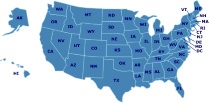
Looking for Another State?
Featured Resources
As an Amazon Associate, we earn from qualifying purchases. We get commissions for purchases made through links on this site.

More Charlotte Mason Education: A Home Schooling How-To Manual
After providing an important work in explaining the Charlotte Mason method for homeschoolers, Catherine Levison goes deeper into the use of this method in the home with her subsequent work. This book expands the information from the first book and of...

Taking Charge of Your Child's Education: A Guide to Becoming the Primary Influence in Your Child's Life
Every parent wants to give their child the best start in life. The best way to do that is to get fully involved in their educational process as their primary influence. This book is full of helpful information, resources, and tools that will lead you...

Visual Brainstorms
Children who love word games, logic puzzles, secret codes, mazes, and math mysteries will stretch their mental muscles with Visual Brain Storms. This set of 100 cards, each of which includes a humorous, full-color drawing, promises "the world's best ...
Create! Press
Create! Press carries creative approaches to teaching creative writing and composition. Their products include the Create-A-Story game, Writing Adventures, Stepping Stones, and more.
Reading Made Easy
Reading Made Easy is a phonics-based program, featuring 108 easy lessons, designed to be taught in less than 30 minutes per day. It is fully scripted and has original Christian content and stories. Includes hands-on writing and drawing activities. Re...