Getting Started on Your Homeschool Journey
There is so much information about homeschooling that it can seem overwhelming. We've gathered information to help you make your homeschooling decision and to inform you about laws and other legal issues. Here you'll find research and statistics that support the notion that homeschooling provides specific advantages to children and families. And we'll help you take the first steps on the road of your own homeschooling adventure.
Why Homeschool?
The first step to homeschooling is making your decision to home educate your child. It is important to become informed and knowledgeable about some of the main concerns you may have. Explore these areas of our website to learn more about the initial decision to homeschool.
How to Begin
You've decided to homeschool your child! But what comes first? For many parents, knowing where to begin in the homeschooling process can be confusing. Although there seems to be so much information available, it may be hard to get your questions answered. We've put together some resources to start you on your journey, giving you the information and motivation you need to successfully begin to homeschool in North Carolina.
Legal/Homeschool Laws
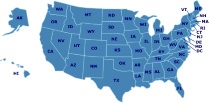
Laws that regulate home education vary from state to state. It is important to understand the legal requirements in your state and to be aware of legislative and other legal issues that affect homeschoolers in your community. We've compiled resources that will help you become informed. Although homeschooling is legal in all 50 states, and the vast majority of homeschoolers face no problems, you may find that you need legal assistance at some point in your homeschooling career. We've compiled a list of resources to help you find the support you need. And if you'd like to become more involved in working towards homeschooling freedoms, we discuss some of the issues facing homeschoolers that we hope you find compelling.
History of Homeschooling
How did homeschooling start? When did it become legal? Who were the key players in making homeschooling the social movement it is today? The story of the history of homeschooling in the United States is a compelling tale of dedication, innovative ideas, and personal conviction and sacrifice. We have put together a history of this educational and social phenomenon, hoping it will inspire you to learn from the early and more recent pioneers of home education in America.
What's Popular
§ 115C-565. Requirements exclusive.
No school which complies with this Part shall be subject to any other provision of law relating to education except requirements of law respecting immunization. The Division of Nonpublic Education, Department of Administration, shall provide to home schools information about meningococcal meningitis and influenza and their vaccines. This information may be provided electronically or on the Division's Web page. The information shall include the causes, symptoms, and how meningococcal meningitis a...
§ 115C-553. Duly authorized representative.
The duly authorized representative of the State of North Carolina to whom reports of commencing operation and termination shall be made and who may inspect certain records under this Part shall be designated by the Governor.
NCHE, The Beginning
Concerns about the arrests and court rulings against homeschoolers prompted the Goldens and the Manahans to form North Carolinians for Home Education (NCHE) with the intention of encouraging and organizing homeschoolers across the state. They began with organizational meetings in public libraries in early 1984.
A New Charter for Homeschooling?
Discusses some of the issues relating to homeschoolers in North Carolina placing their children in public charter and virtual charter schools for some or all of their education. Using examples from Alaska, California, and other parts of the country, author Dr. Karen Palasek examines why homeschooling parents need to be informed about the implications of this type of enrollment.
§ 115C-563. Definitions.
As used in this Part or Parts 1 and 2 of this section [Article]: (a) "Home school" means a nonpublic school in which one or more children of not more than two families or households receive academic instruction from parents or legal guardians, or a member of either household. (b) "Duly authorized representative of the State" means the Director, Division of Nonpublic Education, or his staff.
§ 115C-548. Attendance; health and safety regulations.
Each private church school or school of religious charter shall make, and maintain annual attendance and disease immunization records for each pupil enrolled and regularly attending classes. Attendance by a child at any school to which this Part relates and which complies with this Part shall satisfy the requirements of compulsory school attendance so long as the school operates on a regular schedule, excluding reasonable holidays and vacations, during at least nine calendar months of the year. ...
The Calm Before the Storm
While the NCHE leadership was praising God for the Delconte decision, they knew they would soon be in a fight to keep the right to educate their children at home. In the March/April Greenhouse Report (mailed on May 24, 1985) they warned, “…we must be more watchful than ever to protect our freedoms. Already the media, public educationists, and some legislators are saying, ‘now that it’s legal, we need to regulate it.’” In the same issue, NCHE encouraged homeschoolers to work to keep the then curr...
North Carolina Department of Public Instruction
This is the official website for the North Carolina Department of Public Instruction.
§ 115C-554. Requirements exclusive.
No school, operated by any church or other organized religious group or body as part of its religious ministry, which complies with the requirements of this Part shall be subject to any other provision of law relating to education except requirements of law respecting fire, safety, sanitation and immunization.
Home School Attendance Record Form
This sample form is provided by the NC Division of Non-Public Education.
Growth in the Number of North Carolina Homeschoolers
The figures for North Carolina come from a database Web page maintained by the North Carolina Division of Non-Public Education, the official reporting authority.
§ 115C-549. Standardized testing requirements.
Each private church school or school of religious charter shall administer, at least once in each school year, a nationally standardized test or other nationally standardized equivalent measurement selected by the chief administrative officer of such school, to all students enrolled or regularly attending grades three, six and nine. The nationally standardized test or other equivalent measurement selected must measure achievement in the areas of English grammar, reading, spelling and mathematics...
§ 115C-564. Qualifications and requirements.
A home school shall make the election to operate under the qualifications of either Part 1 or Part 2 of this Article and shall meet the requirements of the Part elected, except that any requirement related to safety and sanitation inspections shall be waived if the school operates in a private residence and except that testing requirements in G.S. 115C-549 and G.S. 115C-557 shall be on an annual basis. The persons providing academic instruction in a home school shall hold at least a high school...
§ 115C-560. New school notice requirements; termination.
(a) Any new school to which this Part relates shall send to a duly authorized representative of the State of North Carolina a notice of intent to operate, name and address of the school, and name of the school's owner and chief administrator. (b) Any school to which this Part applies shall notify a duly authorized representative of the State of North Carolina upon termination of the school.
How to Homeschool in Georgia
If you're trying to decide if homeschooling in Georgia is right for you and your family, then this site will help you make that decision with information about Georgia homeschool laws, homeschool groups in Georgia, curriculum info, and more. 
Resources
Kingdom of Children : Culture and Controversy in the Homeschooling Movement (Princeton Studies in Cultural Sociology)

More than one million American children are schooled by their parents. As their ranks grow, home schoolers are making headlines by winning national spelling bees and excelling at elite universities. The few studies conducted suggest that homeschooled children are academically successful and remarkably well socialized. Yet we still know little about this alternative to one of society's most fundamental institutions. Beyond a vague notion of children reading around the kitchen table, we don't know what home schooling looks like from the inside.

Sociologist Mitchell Stevens goes behind the scenes of the homeschool movement and into the homes and meetings of home schoolers. What he finds are two very different kinds of home education--one rooted in the liberal alternative school movement of the 1960s and 1970s and one stemming from the Christian day school movement of the same era. Stevens explains how this dual history shapes the meaning and practice of home schooling today. In the process, he introduces us to an unlikely mix of parents (including fundamentalist Protestants, pagans, naturalists, and educational radicals) and notes the core values on which they agree: the sanctity of childhood and the primacy of family in the face of a highly competitive, bureaucratized society.

Kingdom of Children aptly places home schoolers within longer traditions of American social activism. It reveals that home schooling is not a random collection of individuals but an elaborate social movement with its own celebrities, networks, and characteristic lifeways. Stevens shows how home schoolers have built their philosophical and religious convictions into the practical structure of the cause, and documents the political consequences of their success at doing so.

Ultimately, the history of home schooling serves as a parable about the organizational strategies of the progressive left and the religious right since the 1960s.Kingdom of Children shows what happens when progressive ideals meet conventional politics, demonstrates the extraordinary political capacity of conservative Protestantism, and explains the subtle ways in which cultural sensibility shapes social movement outcomes more generally.

Homeschool Open House
Personal insights from 55 families worldwide about a real day of homeschooling. Includes homeschool illusions, family culture, learning and family style, parenting strategies, chores and organization, family management, personal empowerment, decision making, change flexibility, resources, and questions to consider before deciding to homeschool. A private tour of homeschooling homes and reflective thoughts from families. Also includes five year follow-ups from families in HOMESCHOOLING: A PATCHWORK OF DAYS.
The Homeschooling Revolution
A readable, scholarly overview of the modern day homeschooling movement. Includes vignettes from homeschooling families, war stories, research information, media reaction, footnotes, and statistics.
They're Your Kids: An Inspirational Journey from Self-Doubter to Home School Advocate

For many people, their schooling was uncomfortable, tedious, and sometimes a waste of time and energy. This book offers the idea that the public school system is tragically flawed and that we are able to do better for our own children. Sam Sorbo, mom of three and wife of actor Kevin Sorbo, took the leap into homeschooling and found the joy and success she was seeking. Included are strategies for working parents, those who are scared to take the leap, and anyone who wants the best for their children. 

A Different Kind of Teacher: Solving the Crisis of American Schooling
In 1991, shortly after receiving both the New York State and New York City Teacher of the Year Awards, John Gatto resigned to begin a new career as an education reform advocate. In this collection of 16 essays, Gatto analyzes the problems of American education and suggests solutions for revitalizing the system — prescriptions that run counter to current trends.
The Exhausted School: Bending the Bars of Traditional Education
These 13 essays, presented at the 1993 National Grassroots Speakout on the Right to School Choice, illustrate how education reform actually works. Written by award-winning teachers and their students, these essays present successful teaching methods that work in both traditional and nontraditional classroom settings. “Gatto’s voice is strong and unique.” — Thomas Moore, author of Care of the Soul
So You're Thinking About Homeschooling: Fifteen Families Show How You Can Do It
Confused and intimidated by the complexities of homeschooling, many sincere parents never get past the "thinking about it" stage. Now Lisa Whelchel - herself a homeschooling mother of three - introduces fifteen real families and shows how they overcome the challenges of their unique homeschooling situations. This nuts-and-bolts approach deals with common questions of time management, teaching weaknesses, and outside responsibilities, as well as children's age variations, social and sports involvement, learning disabilities, and boredom. Seeing a wide variety of successfully homeschooling families in action will give parents the confidence to make their own dream of home-based education a reality.
Homeschoolers' Success Stories : 15 Adults and 12 Young People Share the Impact That Homeschooling Has Made on Their Lives
Despite their growing numbers, many homeschoolers still find their experience somewhat isolating. This collection of short biographies aims to alleviate some of that loneliness. While the stories profile modern-day homeschool grads and students, famous homeschooled personalities from the past are offered up early in the book for historical inspiration. John Adams, Abraham Lincoln, steel magnate Andrew Carnegie, newspaper publisher Joseph Pulitzer, photographer Ansel Adams, poet Robert Frost, and songwriter Irving Berlin join the long list dug up by author Linda Dobson. And just in case there were any doubts that fame has eluded today's homeschooled, Dobson throws in actresses Whoopi Goldberg and Jennifer Love Hewitt, the Hanson singer siblings, and conservative commentator William F. Buckley Jr. The people whose stories are told here are successful entrepreneurs, Ivy League students, and athletes, such as Miami Dolphins defensive end Jason Taylor and U.S. ski team member Todd Lodwick. But to Dobson's credit, she unearths a healthy array of "regular folk" as well. Their stories are no less interesting and, most importantly, they dispel the notion that homeschooled children are over-the-top achievers and freaks of nature. Among the subjects here are an Arkansas state trooper, a private chef, an art gallery owner, and a Cost Guard Reserve seaman.

Each chapter begins with a photo and yearbook-style sketch of the personality, complete with favorite areas of study and a memorable quote. The biographies are short and insightful, with the author often injecting her own thoughts. Dobson, the mother of three homeschooled children, has written numerous books on the topic (The Homeschooling Book of Answers and Homeschooling: The Early Years, among them) and is a news editor and columnist for Home Education Magazine. In her casual, succinct writing style, she brings to life personalities that have little in common beyond their method of education. Some were taught at home completely; others for only a few years. They offer advice, warnings, and fond memories. And their overriding message is that homeschooled people are just as diverse and interesting as the students found in traditional schools. "We are not alone," is the cry heard from these pages. --Jodi Mailander Farrell

Real-Life Homeschooling: The Stories of 21 Families Who Teach Their Children at Home

The book that shows homeschooling in action!

What does it really mean when parents say they homeschool their child or children? For Rhonda Barfield -- a homeschooler for the past 10 years -- the definition is as diverse as the 21 families she studies in this eye-opening book.

Real-Life Homeschooling

From the city to the country, apartments to split-levels, you'll enter each household and see education in action. Discover the challenges and rewards of tailoring instruction to each child's needs while catering to his or her inquisitiveness and curiosity. See why the number of children being taught by their parents is growing nationwide -- at home, there are no overcrowded classrooms, no unknown dangers lurking in the halls, and no doubts as to the quality of the education.

Whether you are just contemplating homeschooling or are a veteran seeking fresh ideas and help in overcoming obstacles -- look no further: Real-life Homeschooling shows just how practical and rewarding it is to educate children and provide them with what they need most -- you!

Should I Home School?: How to Decide What's Right for You & Your Child

Have questions about homeschooling? This book has the answers. The information in this book will help you decide if homeschooling is right for you and your child. 

Looking for Another State?
Featured Resources

As an Amazon Associate, we earn from qualifying purchases. We get commissions for purchases made through links on this site.

Guerrilla Learning: How to Give Your Kids a Real Education With or Without School
If you’ve ever felt that your child wasn’t flourishing in school or simply needs something the experts aren’t supplying, you’re ready to become a "guerrilla educator." this books explains what’s wrong (and what’s useful) about our traditional schools...
A Child's Story of America
This text reads like a story book more than a history textbook. This book has a decidedly Christian bent. Students are given a comprehensive overview of U.S. history from Columbus to the present. Review questions are included throughout, as well as h...
Create! Press
Create! Press carries creative approaches to teaching creative writing and composition. Their products include the Create-A-Story game, Writing Adventures, Stepping Stones, and more.
Tomorrows Child
Tomorrow's Child magazine offers insights and information that helps parents to feel confident that Montessori will prepare their children for the real world. It will help you understand and appreciate Montessori and apply it in your home.
Dr. Montessori's Own Handbook
A short, illustrated guide to the use of Montessori classroom materials. Describes how to set up a "children's house" - an environment for learning where children can be their own masters.